

Beyond the Notes | 27. Flow, Sweet River, Flow
In the great cycle of life, the water which has passed into the distance will one day nourish us once more - for the past is as much the present, as it is the future.

Welcome to Rediscover · Reconnect · Re-Emerge. If you find the fleeting changes of modern life wearisome, maybe even overwhelming, join me on a journey, a path well-trodden, as I share heartfelt and often nostalgic reflections on living slowly, simply, and in tune with the seasons.
In this series, I share some of the pieces of music which have meant the most to me in my life, and the stories behind why they resonate so strongly within a life lived slowly and simply.
When I look back over the music which has meant the most to me in my life, it is often that which evokes times which have passed into history. As a child and a teenager growing up, current ‘pop music’ largely passed me by - somehow, it just didn’t resonate. I felt no connection to it - it was something for other people rather than for me.
But when I ponder those pieces of music - those songs - which have journeyed with me, they come from a spectrum of eras, genres and styles. If the then current pop scene passed me by, Spandau Ballet’s song ‘True’ epitomises to me the 1980s - it evokes everything about that era which I remember growing up. Perhaps the connection is stronger than it might seem, after all, it was No. 1 in the UK Singles Chart nine months before I was born.
Music, perhaps more than other artforms, has the power to evoke memories - to capture moments in time - from the great events of world history, to the pivotal moments in our own lives. I wonder whether, perhaps, as we get older, we look more to the past? Not in a negative way, but in a way which offers us some sense of feeling grounded - having a firm foundation - which we all seek.

If this space has brought you a moment of stillness, a new perspective, or a feeling of home, and if you’d like to help sustain it, becoming a Patron Member is simply a way to say, “I believe in this; I want it to continue”. There’s no paywall, no exclusive content, just immense gratitude and the quiet joy of knowing you’re part of something meaningful. £4 a month or £35 a year. No pressure, just possibility.
By supporting this space, you’ll help nurture its roots, ensuring it continues to grow, bloom, and remain a place where we can all slow down, breathe deeply, and find our place in the rhythms of the changing seasons.
Whether it’s the Medieval polyphony of composers such as Leonin and Perotin, the orchestral music of Vaughan Williams which seems to so perfectly capture the English countryside, or the pop ballads of the 1980s, they evoke in me a connection with the past. Somehow, in looking back - in listening back - to the music of the past, I find something deeply grounding: they were there then, and we are here now. For all the time that has passed, the great cycle of life has continued.
In some ways, we’ve always looked to the past. There are, of course, many who evangelise over the so-called ‘good old days’, whatever they might have been, but at its heart, I think the threads run deeper. In looking back, we seek connection - a sense of identity - an awareness of time and place. It is in music that this is so often found.
In the early part of the 20th century, Vaughan Williams, Cecil Sharp and others collected folk-songs from around the country because they saw that this great oral tradition was coming to an end. In some cases they recorded, and in others, notated, the many folk-songs, all rooted in particular places and cultures - inherited by those who were there to sing them then. It is only in retrospect that we realise that had they not done that, we would have lost so much.
Our fascination with folk music has ebbed and flowed throughout the centuries. In many ways, it was those early song collectors who paved the way for the British folk-revival of the 1960s and 70s. In a world of unimaginable change, with the Cold War hanging above, people once again looked to the past. As well as reviving many of the traditional folk-songs, they were inspired to reimagine this genre for the 20th century. The acoustic renaissance of the 1960s paved the way for the folk rock of bands such as Fairport Convention, Steeleye Span, Pentangle, and Fotheringay of the 1970s.
For all the many musical styles and genres I both play and teach, my Spotify folk music playlist is by far the longest - as a listener, this is the genre to which I feel the strongest connection. Shirley Collins, Sandy Denny, Maddy Prior, and Bridget St John sit alongside Fotheringay and Pentangle. Just like the ebb and flow of the tide, it’s the music which draws me in, and it’s the music which draws me back - but why?
I think the answer might be found in one of my favourites - ‘Sweet Thames Flow Softly’ - a song written by Ewan MacColl in 1966 for an experimental BBC schools radio production of Romeo and Juliet. It drew its inspiration from a line of an Elizabethan poem by Edmund Spenser:
‘Sweet Thames, run softly, till I end my song’
The song tells of a blossoming romance along the banks of the River Thames. The singer - the narrator - takes his lover on a journey along the river, wooing her with the sights and sounds of London town. As the song progresses, the seasons change, and ultimately, the narrator is left alone and heartbroken:
But now alas the tide has changed
My love she has gone from me
And winter’s frost has touched my heart
And put a blight upon me
In many ways, the Thames - water itself - is a metaphor for the relentless passage of time. As the ships and water are carried on the tide out to sea, so it carries our thoughts, dreams and memories. As the song comes to an end, the narrator laments his lover’s passing:
Creeping fog is on the river,
Flow, sweet river, flow
Sun and moon and stars gone with her
Sweet Thames flows softly.
But in that lamenting, there is a beautiful reminder at the end of the song:
Swift the Thames runs to the sea
The water still flows, and it carries us with it.
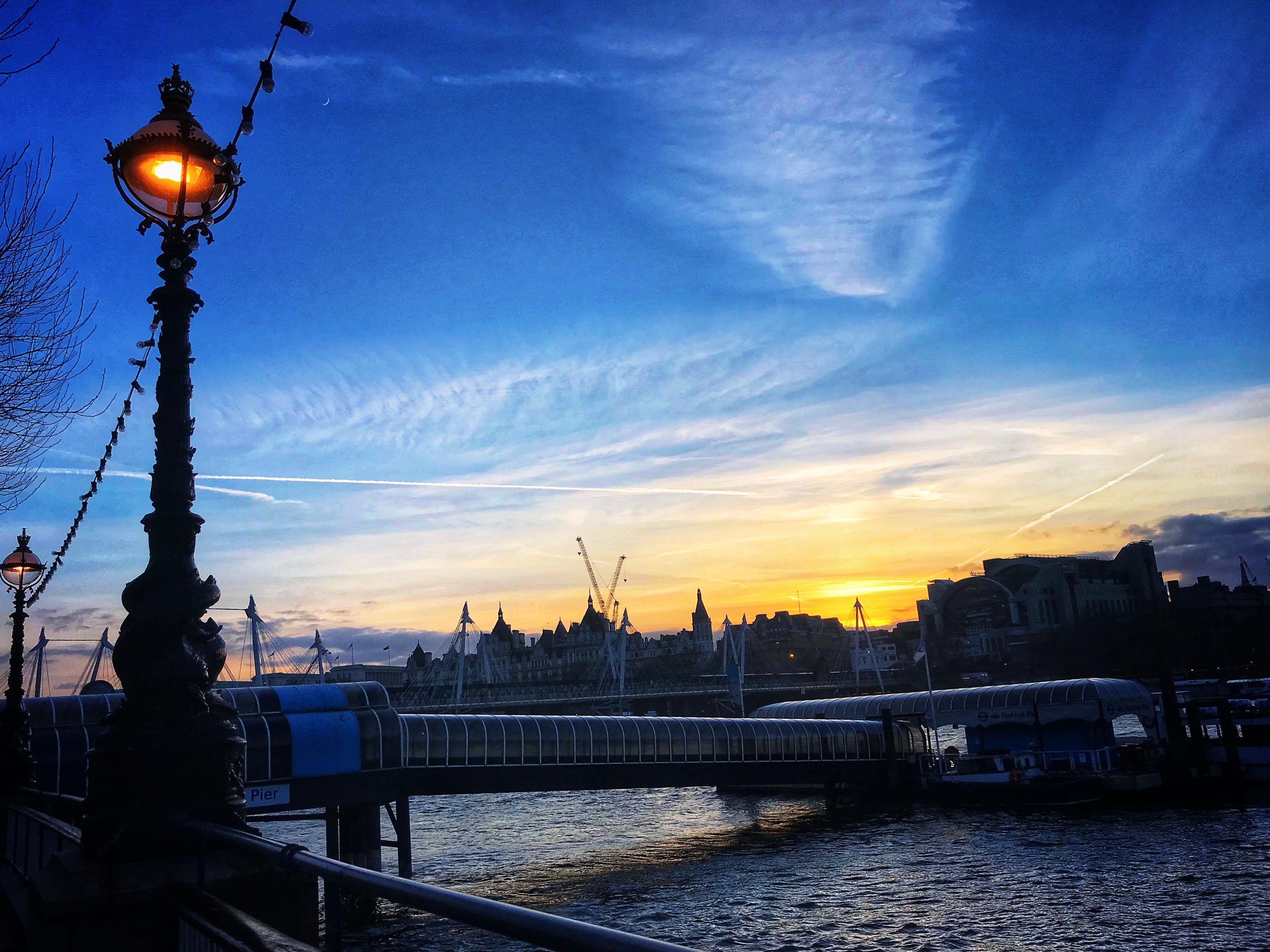
Time passes - it cannot be stopped. Sometimes those passing waters can seem like a relentless torrent, whilst at others, a calm trickle. Just as the tide turns, and the river ebbs and flows, so that is mirrored in our own lives. Folk music - the music of the people - has always existed. It too has ebbed and flowed - we have seen those periodic revivals throughout history, just as we did in the 1960s and 1970s. As other fashions have come and gone, for many, folk music has remained a constant companion.
There is no grand finale to the story of the riverbank romance - time continues to pass, and the water flows gently away beyond the horizon. Perhaps what I seek in folk music - in songs like ‘Sweet Thames Flow Softly’ - is what we all seek - a reassurance that the tide continues to flow, our own lives ebbing and flowing alongside it. In the great cycle of life, the water which has passed into the distance will one day nourish us once more - for the past is as much the present, as it is the future.
If you’re not already doing so, I’d love you to follow me over on Instagram. You can also visit the A Life More Creative website, where you can find out more about My Story, and read articles from my online Journal. Subscribe on Substack to receive new posts and to support my work:
I just listened again to Fairport Convention this week. And then, I see you reference them and Maddy Pryor and others. Small connections always amaze me.🎶
Such beautiful reflections 🥰❤️❤️❤️